What’s up in French slang is a common search because many English speakers want to sound more natural when talking with French friends, traveling in France, or understanding conversations on social media. While the English phrase “What’s up?” is casual and widely used, French has several slang expressions that carry a similar meaning. These phrases vary depending on age, region, and the level of familiarity between speakers.
You may hear them in everyday conversations, TikTok videos, Instagram reels, Snapchat messages, Discord chats, or while watching French movies and TV shows.
Knowing which expression to use and when to use it can help you avoid sounding too formal or using the wrong phrase in casual situations.
Unlike textbook French, slang changes over time. Some expressions are popular among teenagers, while others are common among adults in everyday life.
Quick Answer
What’s up in French slang is commonly expressed as “Wesh?”, “Quoi de neuf ?”, “Ça dit quoi ?”, or “Quoi de beau ?”, depending on the situation. They all mean something similar to “What’s up?”, “What’s going on?”, or “How are things?” in casual conversation.
What Does What’s Up in French Slang Mean in Text?
In text messages and casual conversations, French speakers use several informal expressions instead of a direct translation of “What’s up?”
The meaning usually includes:
- What’s happening?
- How are things?
- Anything new?
- What’s going on?
- How’s life?
The exact meaning depends on the phrase and the relationship between the people talking.
For example:
Friend: Wesh, ça va ?
You: Tranquille, et toi ?
Translation:
Friend: What’s up?
You: All good, and you?
What’s Up in French Slang Full Form / Definition
Unlike abbreviations such as LOL or BRB, “What’s up in French slang” does not have a full form. Instead, it refers to several informal French greetings that replace the English phrase.
Some of the most common include:
| French Slang | English Meaning | Formality |
| Wesh ? | What’s up? | Very casual |
| Quoi de neuf ? | What’s new? | Casual |
| Ça dit quoi ? | What’s up? | Casual |
| Quoi de beau ? | What’s new lately? | Casual |
| Alors ? | So, what’s up? | Casual |
| Bien ou quoi ? | You good or what? | Very informal |
Each expression fits different situations, but all are used to start friendly conversations.
Is What’s Up in French Slang Rude, Offensive, or Neutral?
Most French slang greetings are neutral or friendly when used with friends.
However, context matters.
Neutral Expressions
These are safe for everyday casual conversations.
- Quoi de neuf ?
- Alors ?
- Quoi de beau ?
Very Casual Expressions
These are popular among younger speakers.
- Wesh ?
- Ça dit quoi ?
- Bien ou quoi ?
When It May Sound Inappropriate
Using slang with:
- your teacher
- your boss
- alternative strangers
- during job interviews
may seem disrespectful or too informal.
Instead, use polite greetings like:
- Bonjour
- Comment allez vous ?
- Comment ça va ?
Where Is What’s Up in French Slang Commonly Used?
French slang greetings appear almost everywhere informal communication happens.
Common places include:
- Text messages
- Snapchat
- Instagram DMs
- TikTok comments
- Discord servers
- Reddit discussions
- Gaming chats
- WhatsApp conversations
- School conversations
- University campuses
Teenagers and young adults use these expressions much more often than older generations.
Most Popular Ways to Say “What’s Up?” in French Slang
1. Wesh?
“Wesh?” is probably the best known French slang greeting.
Originally influenced by North African Arabic, it became extremely popular in urban French culture.
Meaning:
- What’s up?
- Yo!
- Hey!
Example:
Lucas: Wesh, ça roule ?
Emma: Oui, tranquille.
Translation:
Lucas: Yo, what’s up?
Emma: Everything’s good.
Tone:
- Very informal
- Youth slang
- Popular online
2. Quoi de neuf ?
Literally means:
“What’s new?”
This is one of the safest casual greetings.
Example:
Marie: Quoi de neuf ?
Paul: Pas grand chose.
Translation:
Marie: What’s new?
Paul: Not much.
Tone:
- Friendly
- Casual
- Suitable for most friends
3. Ça dit quoi ?
Literally:
“What does it say?”
Actual meaning:
“What’s up?”
Example:
Ça dit quoi aujourd’hui ?
Translation:
What’s going on today?
Tone:
- Modern
- Youth slang
- Common in texting
4. Quoi de beau ?
This phrase asks if anything interesting or exciting has happened recently.
Example:
Quoi de beau cette semaine ?
Translation:
Anything good this week?
Tone:
- Friendly
- Relaxed
- Casual conversation
5. Alors ?
Although it literally means “So?”, French people often use it as a greeting.
Example:
Alors ?
Ça va ?
Meaning:
“So… what’s up?”
This is short, simple, and common in spoken French.
6. Bien ou quoi ?
This expression is mostly heard among younger speakers.
Meaning:
“You good or what?”
Example:
Bien ou quoi ?
Translation:
Everything good?
Tone:
- Very casual
- Mostly among close friends
Why There Isn’t One Perfect Translation
Many learners expect one exact French version of “What’s up?”
In reality, French speakers choose different expressions depending on:
- their age
- region
- relationship
- setting
- personality
Someone in Paris may say “Ça dit quoi ?”, while another person might simply say “Quoi de neuf ?”
That flexibility is what makes French slang interesting and authentic.
Origin and Background of “What’s Up” in French Slang
There is no single French slang phrase that directly translates to the English expression “What’s up?” Instead, several informal greetings have developed over time through everyday conversations and cultural influences.
For example:
- Wesh? became popular in the 1990s and 2000s through French urban culture. It has roots in North African Arabic and is now widely recognized among younger generations.
- Quoi de neuf ? has existed much longer and simply means “What’s new?” It remains one of the most common casual greetings.
- Ça dit quoi ? gained popularity through youth culture, texting, and social media.
- Quoi de beau ? is a friendly way of asking whether anything interesting has happened recently.
Today, these expressions are commonly heard in France and among French speaking communities worldwide.
Comparison with Similar French Slang
Although these phrases all relate to “What’s up?”, they are not always interchangeable.
| French Slang | English Meaning | Best Used With | Tone |
| Wesh ? | Yo! / What’s up? | Close friends | Very casual |
| Quoi de neuf ? | What’s new? | Friends, classmates | Casual |
| Ça dit quoi ? | What’s going on? | Friends | Casual |
| Quoi de beau ? | Anything good? | Friends | Friendly |
| Alors ? | So, what’s up? | Almost anyone you know | Casual |
| Bien ou quoi ? | You good or what? | Close friends | Informal |
Which One Should You Choose?
- For beginners: Quoi de neuf ?
- For everyday conversations: Alors ?
- For younger friends: Ça dit quoi ?
- For modern urban slang: Wesh ?
When to Avoid Using French Slang
French slang is useful, but it’s not appropriate in every situation.
Avoid using these expressions when speaking with:
- Teachers
- Employers
- Customers
- alternative strangers
- Government officials
- During interviews
- In formal emails
Instead, choose polite greetings such as:
- Bonjour
- Bonsoir
- Comment allez vous ?
- Enchanté
Using the right level of formality shows respect and leaves a better impression.
Polite Alternatives to “What’s Up?” in French
If you’re unsure whether slang is appropriate, these expressions are much safer.
| Polite French | English Meaning |
| Bonjour | Hello |
| Bonsoir | Good evening |
| Comment allez vous ? | How are you? |
| Comment ça va ? | How’s it going? |
| Ravi de vous rencontrer | Nice to meet you |
These phrases work well in schools, workplaces, business meetings, and formal situations.
Why People Use French Slang
Slang helps conversations feel more natural and relaxed.
People use it because it:
- Sounds friendly.
- Creates a casual atmosphere.
- Shows familiarity.
- Helps people fit into local culture.
- Makes texting faster.
- Reflects modern speech.
Among teenagers and young adults, slang is often preferred over formal French in everyday conversations.
Impact of Using French Slang in Communication
Knowing French slang can improve your communication, but only if you use it correctly.
Positive Effects
- Makes you sound more natural.
- Helps you understand movies and TV shows.
- Improves conversations with native speakers.
- Makes social media easier to understand.
- Builds confidence while traveling.
Possible Downsides
- Some slang becomes outdated.
- Certain expressions may not be understood in every French speaking country.
- Very informal slang may sound disrespectful in professional settings.
Learning when not to use slang is just as important as learning the words themselves.
Is What’s Up in French Slang Safe for Social Media?
Yes. Most French slang greetings are perfectly safe for platforms like:
- TikTok
- Snapchat
- Discord
- X (formerly Twitter)
However, always consider your audience.
For example:
✔ Wesh, ça va ?
Works well in a casual message to a friend.
But in a professional LinkedIn message or business email, it would feel too informal.
Real Life Examples of Usage
Here are different examples showing how French slang greetings are used in everyday conversations.
Friendly Conversation
Emma: Quoi de neuf ?
Lucas: Pas grand chose. Et toi ?
Translation
Emma: What’s new?
Lucas: Not much. You?
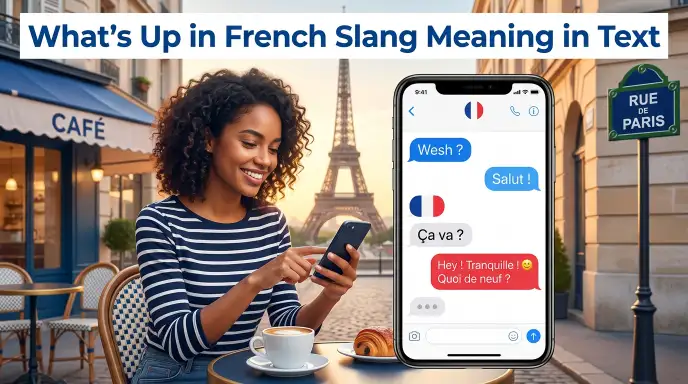
Casual Text Message
A: Wesh !
B: Salut ! Ça va ?
Translation
A: Yo!
B: Hey! How’s it going?
Gaming Chat
Player 1:
Ça dit quoi ce soir ?
Player 2:
On joue à 8 heures.
Translation:
Player 1:
What’s the plan tonight?
Player 2:
We’re playing at 8 PM.
Social Media Comment
Comment:
Wesh 😂
Meaning:
“Yo!” or “Hey!” used as a playful greeting.
Group Chat
Friend:
Alors, quoi de beau ?
Reply:
Je pars en vacances demain !
Translation:
Friend:
What’s new?
Reply:
I’m leaving for vacation tomorrow!
Meeting a Friend After a Long Time
Friend:
Quoi de neuf depuis la dernière fois ?
Reply:
J’ai commencé un nouveau travail.
Translation:
Friend:
What’s new since we last met?
Reply:
I started a new job.
Casual Greeting
Person A:
Alors ?
Person B:
Ça va bien, merci.
Translation:
A:
So, what’s up?
B:
I’m doing well, thanks.
Common Mistakes English Speakers Make
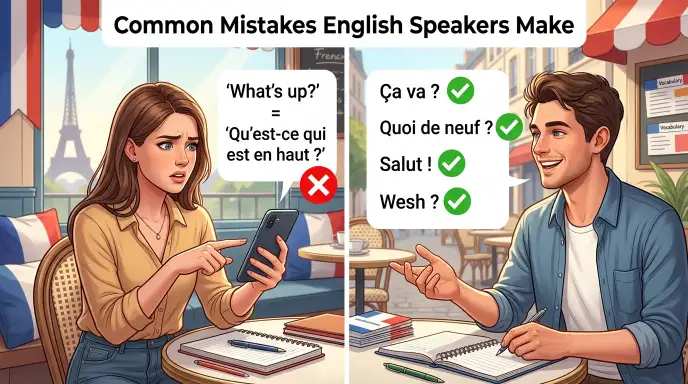
Many learners accidentally translate English directly into French.
Here are a few common mistakes:
Mistake 1
❌ Qu’est ce qui se passe ? (used as a greeting)
While it literally means “What’s happening?”, native speakers usually use it only when something unusual is going on.
Mistake 2
Using Wesh? with your teacher or boss.
This may sound rude because it’s highly informal.
Mistake 3
Thinking every French speaker uses the same slang.
Different regions and age groups often prefer different expressions.
Mistake 4
Using slang in formal emails.
Business communication should remain polite and professional.
Tips for Using French Slang Naturally
If you’re learning French, these simple tips can help:
- Listen to native speakers.
- Watch French YouTube videos.
- Read French social media comments.
- Learn the context, not just the words.
- Match your language to the situation.
- Avoid overusing slang until you’re comfortable with it.
Using even one or two common slang greetings correctly can make your French sound much more natural.
FAQs About What’s Up in French Slang
1. What does “what’s up” in French slang mean?
It usually means “What’s going on?”, “What’s new?”, or “How are things?” Common French slang expressions include Wesh?, Quoi de neuf ?, and Ça dit quoi ?.
2. What is the most common French slang for “what’s up”?
Quoi de neuf ? is one of the most common and widely understood casual greetings. Among younger people, Wesh ? and Ça dit quoi ? are also very popular.
3. Is “Wesh?” considered rude?
Not usually. Wesh? is very informal and friendly when used with close friends. However, it can sound disrespectful if used with teachers, employers, or people you don’t know well.
4. Can I use French slang while traveling in France?
Yes, but choose your words carefully. Expressions like Quoi de neuf ? or Alors ? are generally safe in casual conversations. Save stronger slang like Wesh? for friends or people of a similar age.
5. Is there an exact French translation for “What’s up?”?
No. French doesn’t have one perfect equivalent. Instead, speakers use several expressions depending on the situation, such as Quoi de neuf ?, Ça dit quoi ?, Quoi de beau ?, or Alors ?.
6. Is French slang commonly used online?
Yes. French slang appears frequently on TikTok, Instagram, Snapchat, Discord, Reddit, WhatsApp, gaming chats, and text messages, especially among teenagers and young adults.
Final Comparison Table
| Expression | Meaning | Formality | Best For |
| Wesh ? | What’s up? / Yo! | Very informal | Close friends |
| Quoi de neuf ? | What’s new? | Casual | Everyday conversations |
| Ça dit quoi ? | What’s going on? | Casual | Texting and social media |
| Quoi de beau ? | Anything interesting? | Casual | Friendly chats |
| Alors ? | So, what’s up? | Casual | General conversations |
| Bonjour | Hello | Formal | Work and professional settings |
| Comment allez vous ? | How are you? | Formal | Respectful conversations |
Key Takeaways
- French has several slang alternatives to the English phrase “What’s up?”
- Quoi de neuf ? is the safest and most common casual option.
- Wesh? is very informal and popular among younger speakers.
- Always consider who you’re speaking to before using slang.
- In formal situations, use polite greetings instead of slang.
Conclusion
What’s up in French slang can be expressed in several ways, including Wesh?, Quoi de neuf ?, Ça dit quoi ?, Quoi de beau ?, and Alors ?.
While they all serve a similar purpose, each carries its own level of formality and is best suited to different social situations.
Understanding these expressions helps you communicate more naturally with French speakers, whether you’re chatting with friends, traveling in France, or engaging on social media.
Remember that slang is constantly evolving, so the most appropriate phrase depends on context, age, and the relationship between speakers.
If you’re just starting to learn French, begin with Quoi de neuf ? or Alors ?, as they are easy to understand and widely accepted.
As your confidence grows, you can explore more modern expressions like Wesh? and Ça dit quoi ?.
By using the right greeting at the right time, you’ll sound more authentic and connect more comfortably with native French speakers.
Read more about!
- Florida Slang: Complete Guide to Local Expressions
- Tosser Slang: Meaning, Uses, Examples & Origin
- KMT Meaning in Text and Social Media

Hi, I’m Chloe Parker. I write simple and practical articles about slang, grammar, spelling, vocabulary, and commonly confused words. My goal is to make English easier to understand through clear explanations and real-life examples. Whether you’re a student, writer, or English learner, I’m here to help you build confidence and improve your everyday English.