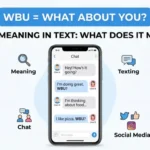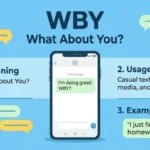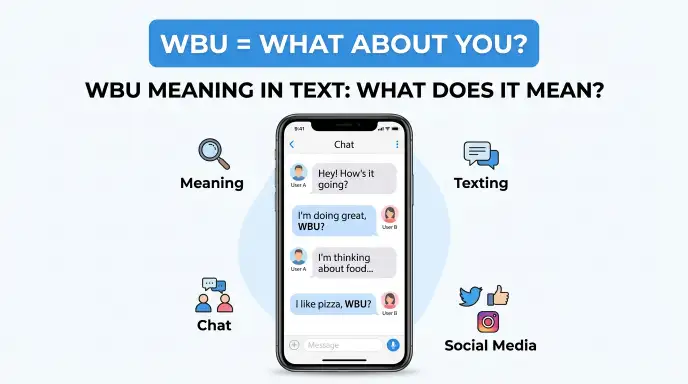
WBU means “What About You?” in text messages and online chats. It is a casual abbreviation people use after sharing their own answer, opinion, plans, or feelings to ask the same thing about the other person.
You may see WBU in text messages, TikTok comments, Snapchat chats, Instagram DMs, WhatsApp conversations, and other informal online spaces.
For example, someone might text, “I’m staying home tonight, WBU?” They simply mean, “I’m staying home tonight. What about you?”
People often search for the meaning because WBU can appear suddenly in a conversation, especially when someone uses several texting abbreviations together. Once you know the meaning, it is one of the easier shortcuts to understand.
In this guide, you’ll learn what WBU means, how people use it, how to reply, if it is rude, where it came from, and how it compares with abbreviations such as IDK, IDC, IMO, and BRB.
WBU Meaning in Text
WBU stands for “What About You?”
It is an informal texting abbreviation used to turn a question back toward another person. If someone tells you their answer and then adds “WBU?”, they want to know your answer too.
For example:
A: I’m good today. WBU?
B: I’m doing pretty well too.
The full version would be:
“I’m good today. What about you?”
WBU is usually written in uppercase, lowercase, or mixed case:
- WBU
- wbu
- Wbu
The capitalization normally does not change the meaning.
Is WBU Slang, an Acronym, or an Abbreviation?
WBU is best described as a texting abbreviation or internet abbreviation. Some slang dictionaries and abbreviation resources also classify it as internet slang because it is strongly associated with casual digital communication.
It is formed from the first letters of the words:
- W = What
- B = About
- U = You
So:
WBU = What About You?
Unlike some slang expressions that have a special meaning unrelated to their original words, WBU is simply a shortened version of an ordinary English question.
What Does WBU Mean in Everyday Chat?
In everyday chat, WBU usually means “What about you?”, “And you?”, or “How about you?”, depending on the conversation.
For example:
“I love pizza. WBU?”
means:
“I love pizza. What about you?”
Or:
“I’m free this weekend, WBU?”
means:
“I’m free this weekend. What about you?”
The purpose is often to keep the conversation moving instead of ending it after one person answers.
Why Do People Use WBU?
There are a few simple reasons people use this abbreviation.
It Saves Time
Typing three letters is faster than typing “What about you?”
That matters in fast moving chats, especially when someone is sending several short messages.
It Keeps the Conversation Going
WBU gives the other person an easy opportunity to answer.
For example:
“I’m watching a movie right now, WBU?”
The sender is not just giving information. They are inviting the other person to continue the conversation.
It Returns the Question
If someone asks:
“What are you doing tonight?”
You might answer:
“I’m staying home, WBU?”
You have answered the question and returned it at the same time.
It Fits Casual Online Language
Digital conversations often use short forms such as LOL, IDK, IMO, BRB, and WBU. These expressions can make casual conversations quicker and less formal.
Where People Use WBU
WBU can appear across many types of casual digital communication. The basic meaning stays the same, but the situation can change slightly depending on the platform.
WBU on TikTok
On TikTok, WBU may appear in comments, replies, direct messages, or conversations connected to a video.
For example:
“I’m definitely trying this trend. WBU?”
Here, the person is asking if the other person plans to try it too.
Another example could be:
“This is my favorite song, wbu?”
That means:
“This is my favorite song right now. What about you?”
The abbreviation is informal, so it fits casual TikTok conversations better than formal communication.
WBU on Snapchat
Snapchat conversations are often short and quick, making abbreviations such as WBU useful.
Someone might send:
“I’m bored 😭 wbu?”
That means:
“I’m bored. What about you?”
A person might also use WBU after discussing school, weekend plans, food, movies, or everyday activities.
WBU on Instagram
On Instagram, WBU can appear in DMs, replies, and casual conversations.
For example:
“I’m obsessed with this show. WBU?”
The sender wants to know if you like the show too.
It can also be used when discussing plans:
“I’m going Saturday. WBU?”
Again, the meaning is simply “What about you?”
WBU on WhatsApp
WhatsApp is another common setting for casual abbreviations.
A conversation might look like:
“I’m free after 7, wbu?”
This means:
“I’m free after 7. What about you?”
It can be used between friends, family members, classmates, or other people who normally communicate casually.
WBU in SMS Texting
WBU also works with ordinary SMS messages.
For example:
“I’m almost home. WBU?”
The sender is asking about your situation.
The abbreviation is especially useful when both people already understand informal texting language.
Real Chat Examples of WBU
Here are 10 natural examples showing how WBU can appear in real conversations.
Example 1: Checking In
A: I’m doing pretty good today. WBU?
B: I’m good too, just tired.
Here, WBU means “What about you?” after A answers a general question about how they are doing.
Example 2: Weekend Plans
A: I’m staying home this weekend. WBU?
B: I might go out with some friends.
The abbreviation helps A ask about B’s plans without repeating the full question.
Example 3: Food
A: I’m getting pizza for dinner. WBU?
B: Probably getting burgers lol.
WBU simply asks what the other person is having.
Example 4: Movies
A: I watched that movie last night. WBU?
B: Not yet. Is it good?
Here, the conversation naturally moves from one person’s experience to the other’s.
Example 5: School
A: I have math homework tonight. WBU?
B: Same 😭 I haven’t even started.
This is a typical casual conversation between students or friends.
Example 6: Music
A: I’ve been listening to Drake all day. WBU?
B: I’m more into old school music today.
The sender is asking about the other person’s current music choice.
Example 7: Plans
A: I can meet around 6. WBU?
B: 6 works for me.
In this case, WBU is asking about the other person’s availability.
Example 8: Feelings
A: I’m kinda nervous about tomorrow. WBU?
B: Honestly, same.
The phrase can be used after sharing an emotion or personal feeling.
Example 9: Hobbies
A: I’m playing Fortnite right now. WBU?
B: Just watching YouTube.
The conversation is casual and the abbreviation keeps it short.
Example 10: Location
A: I’m from Lahore. WBU?
B: I’m from Islamabad.
Here, WBU asks where the other person is from.
How to Reply When Someone Says WBU
When someone sends WBU?, the easiest response is to answer the same question they just answered.
You usually do not need to explain what WBU means. Simply respond naturally.
For example:
Them: I’m staying home tonight, WBU?
You: Same, probably just watching a movie.
You can reply in different ways depending on the tone of the conversation.
Funny Replies
If the conversation is playful, you can answer with humor.
- “WBU? I’m fighting for my life against my homework 😂”
- “Currently surviving, so there’s that 😭”
- “Me? Pretending I have my life together lol.”
- “WBU? Asking the important questions today 😂”
These work best when you already have a relaxed relationship with the person.
Casual Replies
For a normal friend to friend conversation:
- “I’m just chilling.”
- “Probably staying home.”
- “Same tbh.”
- “I’m heading out soon.”
- “Just watching Netflix.”
You do not need a long answer.
Friendly Replies
If you want to sound warm and interested:
- “I’m doing pretty well! How about you?”
- “I’m good, thanks! What are you up to?”
- “I’m having a nice day so far. WBU?”
- “Doing good! Any plans for tonight?”
These responses help keep the conversation going.
Neutral Replies
If you want to keep things simple:
- “I’m fine.”
- “I’m at home.”
- “I’m working right now.”
- “I’m free later.”
- “Not much, honestly.”
The best reply depends on what the original conversation is about.
Is WBU Rude or Offensive?
No, WBU is generally not rude or offensive.
It is simply a casual way of saying “What about you?” The abbreviation itself does not contain an insult, profanity, or offensive meaning in its usual texting use.
However, tone always depends on context.
For example:
“Good. WBU?”
could feel short or distant if the conversation is serious.
But:
“I’m good! WBU? 😊”
sounds warmer.
The abbreviation itself is neutral. The surrounding words, punctuation, emojis, and relationship between the people can affect how a message feels.
Is WBU Safe to Use?
WBU is generally fine for casual communication.
It can work in:
- Text messages
- Friend group chats
- Social media DMs
- Casual WhatsApp conversations
- Snapchat chats
- Informal online conversations
For formal writing, however, it is better to write the complete phrase.
Instead of:
“I’m available tomorrow. WBU?”
a professional message could say:
“I’m available tomorrow. What about you?”
Is WBU Appropriate at School or Work?
It depends on the situation.
A casual message to a friend at school is fine:
“I’m studying tonight, WBU?”
But WBU is usually not the best choice for a formal email, business report, application, academic assignment, or professional correspondence.
Formal communication generally benefits from complete words and clear sentences.
Who Uses WBU?
WBU is mainly associated with people who communicate through texting, messaging apps, and online chats. Some abbreviation references describe its typical users broadly as teenagers and adults.
Teenagers and Young Adults
Younger internet users may encounter WBU frequently because short forms are common in casual digital communication.
However, WBU is not limited to one age group.
Gen Z
Gen Z users may use WBU in casual texting, DMs, and group conversations. It can appear alongside other short forms such as IDK, TBH, IMO, BTW, and BRB.
That does not mean every Gen Z user uses it. Slang preferences vary from person to person and platform to platform.
Adults
Adults also use texting abbreviations, especially when messaging friends, relatives, or other people with whom they have an informal relationship.
Common Platforms
WBU can be encountered in:
- Text messages
- Snapchat
- TikTok
- Messenger
- Group chats
- Other online messaging services
Its exact frequency can vary by community, age group, and platform.
Origin of WBU
The basic phrase “what about you?” is much older than internet slang. WBU is a shortened digital form of that familiar phrase.
There is no single universally documented moment when WBU was invented. It is better understood as part of the broader development of texting and internet abbreviations.
As SMS and online chat became popular, people began shortening common expressions to save time and typing effort. WBU fits naturally into that pattern.
Similar shortcuts developed around the same general period, including abbreviations such as:
- IDK :I Don’t Know
- BRB :Be Right Back
- IMO :In My Opinion
- IDC :I Don’t Care
- BTW :By The Way
- TBH :To Be Honest
The exact first use of WBU is difficult to establish from publicly available references, so claims about one specific inventor or exact starting date should be treated carefully.
The important point is that WBU developed as a convenient abbreviation for a phrase people were already using in everyday speech.
WBU vs. IDK, IDC, IMO, and BRB
WBU is sometimes confusing when it appears beside other texting abbreviations. These terms do different jobs.
| Term | Meaning | Type | Usage | Popularity |
| WBU | What About You? | Texting abbreviation | Returns a question | Common in casual chat |
| IDK | I Don’t Know | Texting abbreviation | Shows uncertainty or lack of knowledge | Very common |
| IDC | I Don’t Care | Texting abbreviation | Shows lack of concern or preference | Common in casual chat |
| IMO | In My Opinion | Texting abbreviation | Introduces an opinion | Common online |
| BRB | Be Right Back | Texting abbreviation | Says the person will temporarily leave | Common in informal chat |
WBU vs. IDK
WBU asks about another person’s answer.
IDK means the sender does not know something.
Example:
“I’m going to the mall, WBU?”
This asks what you are doing.
But:
“IDK where he went.”
means the sender does not know where he went.
WBU vs. IDC
WBU and IDC have completely different meanings.
“I’m ordering pizza, WBU?”
asks what you want or are doing.
“IDC what we eat.”
means:
“I don’t care what we eat.”
Depending on context, IDC can sound blunt, so tone matters.
WBU vs. IMO
IMO means “In My Opinion.”
Example:
“IMO, that movie was great.”
The speaker is giving an opinion.
WBU, on the other hand, asks for the other person’s answer.
“I liked the movie. WBU?”
WBU vs. BRB
BRB means “Be Right Back.”
Example:
“BRB, my mom is calling.”
The person is saying they will temporarily step away.
WBU has nothing to do with leaving a conversation. It means “What About You?”
Real World Usage Example
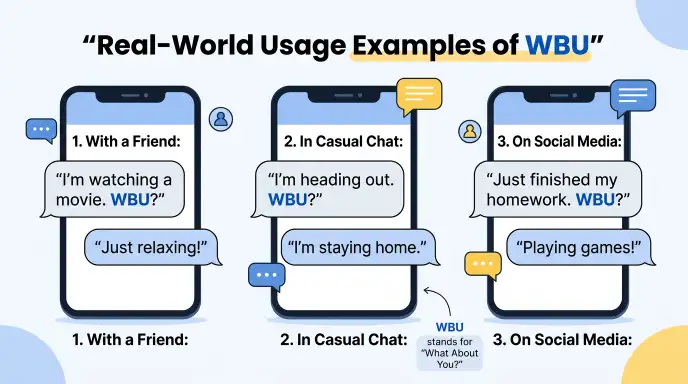
Imagine two friends are making plans for Saturday.
One friend asks:
“Are you going out Saturday?”
The other replies:
“Yeah, I’m meeting some friends. WBU?”
The second person answered the question and then returned it.
The conversation could continue:
A: Are you going out Saturday?
B: Yeah, I’m meeting some friends. WBU?
A: I might go shopping.
B: Nice, where are you going?
This is exactly the kind of situation where WBU feels natural.
It works because both people already understand the context. There is no need to repeat “What about you?” in full.
WBU vs. HBU and WBY
Although your main question is about WBU, it is useful to know two similar forms.
WBU vs. HBU
WBU means:
What About You?
HBU means:
How About You?
In many casual conversations, they serve nearly the same purpose.
For example:
“I’m good, WBU?”
and:
“I’m good, HBU?”
can both naturally ask the other person how they are doing.
WBU vs. WBY
WBY can also be used to mean “What About You?” in texting. Some abbreviation references list it as an alternative short form.
Still, people may have different personal preferences about which abbreviation they use.
If someone sends WBU, there is normally no reason to overthink it. In ordinary chat, the intended meaning is usually clear from context.
Common Ways People Use WBU
WBU can follow many different kinds of statements.
Asking About Feelings
“I’m feeling better today, WBU?”
Asking About Plans
“I’m free tonight, WBU?”
Asking About Opinions
“I actually liked it, WBU?”
Asking About Preferences
“I prefer coffee, WBU?”
Asking About Activities
“I’m watching a movie, WBU?”
Asking About Location
“I’m at home, WBU?”
In each case, the abbreviation invites the other person to share their side.
When Should You Avoid Using WBU?
WBU is useful, but it is not appropriate for every situation.
Avoid it when you are writing something formal or professional.
For example, do not normally use:
“Dear Professor, I completed the assignment. WBU?”
Instead, use complete and appropriate language.
Similarly, in a professional email, write:
“I’m available on Friday. What about you?”
rather than:
“I’m available Friday, WBU?”
The difference is not about the meaning. Both communicate the same basic question. The difference is formality.
If you are unsure if an abbreviation is appropriate, writing the full phrase is usually the safer choice.
Frequently Asked Questions
What does WBU mean in text messages?
WBU means “What About You?” It is a casual texting abbreviation used to ask the other person the same question after sharing your own answer.
What does WBU mean on TikTok?
On TikTok, WBU usually means “What About You?” It can appear in comments, replies, DMs, or other casual conversations.
Is WBU slang?
WBU is commonly treated as a texting or internet abbreviation and may also be categorized as internet slang. Its literal meaning is simply “What About You?”
Is WBU rude or offensive?
No. WBU is generally neutral and not offensive. However, a very short message can sometimes feel blunt depending on the surrounding conversation and tone.
How should you reply to WBU?
Answer the same question about yourself. For example, if someone says, “I’m staying home tonight, WBU?” you could reply, “Same, I’m just relaxing.”
Does WBU mean “What About You?”
Yes. In ordinary texting and online chat, WBU most commonly stands for “What About You?”
Can WBU be written in lowercase?
Yes. Both WBU and wbu can mean “What About You?” Capitalization normally does not change the meaning.
Is WBU the same as HBU?
They are very similar. WBU means “What About You?” while HBU means “How About You?” In casual conversations, people often use them in similar situations.
Can I use WBU at work?
It depends on the setting. It may be fine in a casual workplace chat with someone you know well, but it is better to use “What about you?” in formal emails and professional documents.
Conclusion
WBU means “What About You?” It is a short, casual texting abbreviation used after someone shares an answer, opinion, feeling, plan, or other information.
You may see it in text messages, WhatsApp chats, Snapchat, Instagram, TikTok, and other informal online conversations. Its main purpose is simple: it turns the conversation back to the other person.
For example:
“I’m staying home tonight, WBU?”
simply means:
“I’m staying home tonight. What about you?”
WBU is generally neutral and safe for casual conversations. It is not normally rude or offensive. However, formal school, business, and professional communication usually calls for the full phrase instead.
Once you understand the context, WBU is easy to recognize. When someone sends it, they are usually inviting you to share your side of the conversation.
More Slang Explained!

Hi, I’m Chloe Parker. I write simple and practical articles about slang, grammar, spelling, vocabulary, and commonly confused words. My goal is to make English easier to understand through clear explanations and real-life examples. Whether you’re a student, writer, or English learner, I’m here to help you build confidence and improve your everyday English.