Hawaiian slang for brother is a popular search because many people hear words like braddah, brah, or bruddah in Hawaii, movies, YouTube videos, social media, or while visiting the islands. At first, these words may sound like they simply mean a biological brother, but in Hawaiian culture, they often have a much deeper meaning.
These expressions are commonly used between friends, family members, coworkers, and even strangers to show warmth, respect, and a sense of community.
Understanding when and how to use them helps you communicate naturally while also respecting Hawaiian culture.
If you’re planning a trip to Hawaii, learning local slang, or just curious about what someone meant in a text message, this guide explains everything in simple English.
Quick Answer
Hawaiian slang for brother is most commonly braddah or brah. These words usually mean “brother,” “friend,” “buddy,” or “close person” and are friendly, informal expressions used throughout Hawaii.
What Does Hawaiian Slang for Brother Mean in Text?
When someone texts “Thanks, braddah!” or “Howzit, brah?”, they are usually not talking to their actual brother.
Instead, they are expressing friendship, closeness, or respect.
Depending on the conversation, braddah can mean:
- Friend
- Buddy
- Bro
- Close companion
- Trusted person
- Community member
In Hawaii, these words help create a feeling of ohana (family), even among people who are not related.
Example
Person A: “Can you help me move tomorrow?”
Person B: “No problem, braddah.”
Meaning: Of course, my friend.
Hawaiian Slang for Brother Full Form / Definition
Unlike internet abbreviations such as LOL or BRB, hawaiian slang for brother does not have a full form.
Instead, it includes local words derived from the English word brother, spoken in Hawaiian Pidgin (Hawaii Creole English).
Common versions include:
| Slang | Meaning |
| Braddah | Brother, friend, buddy |
| Brah | Bro, friend |
| Bruddah | Another pronunciation of brother |
| Bro | Friend or male companion |
These words are spoken naturally in everyday Hawaiian conversations.
Is Hawaiian Slang for Brother Rude, Offensive, or Neutral?
Most of the time, these expressions are friendly and respectful.
Neutral and Friendly
People often say:
- “Mahalo, braddah.”
- “Howzit, brah?”
- “Good seeing you, braddah.”
These sound warm and welcoming.
When It Can Sound Negative
Tone matters.
For example:
“Listen here, brah.”
This could sound confrontational depending on the speaker’s voice and situation.
The slang itself is not offensive, but context changes how it is received.
Where Is Hawaiian Slang for Brother Commonly Used?
These words are widely used across Hawaii in daily life.
You’ll hear them in:
- Daily conversations
- Beaches
- Surfing communities
- Local businesses
- Schools
- Family gatherings
- Neighborhoods
You may also see them online on:
- TikTok
- YouTube
- Text messages
Many Hawaiian content creators naturally use brah or braddah in their videos.
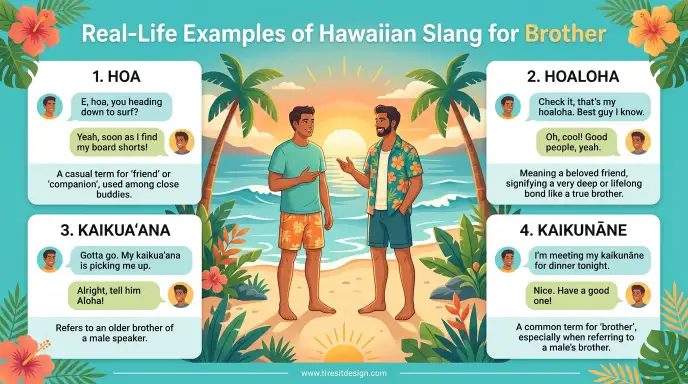
Real Life Examples of Hawaiian Slang for Brother
Here are natural examples from everyday conversations.
Friendly
“Thanks for helping me, braddah.”
Casual
“Howzit, brah? Long time no see.”
Family
“My older braddah taught me how to surf.”
Workplace
“Morning, braddah. Ready for work?”
Text Message
“Happy birthday, braddah! Hope you have an awesome day.”
Social Media
“Big mahalo to all my braddahs for the support.”
Origin and Background of Hawaiian Slang for Brother
The word braddah developed through Hawaiian Pidgin, also known as Hawaii Creole English.
During the 1800s and early 1900s, plantation workers from different countries needed a common language to communicate. Over time, English mixed with Hawaiian, Japanese, Portuguese, Filipino, Chinese, and other languages.
This created Hawaiian Pidgin.
Many English words developed unique local pronunciations.
For example:
- Brother → Braddah
- Sister → Sistah
Today, these words are an important part of Hawaii’s local identity.
They represent friendliness, equality, and community.
Why People Use Hawaiian Slang for Brother
People use these expressions for many reasons.
To Show Friendship
Calling someone braddah creates an instant friendly atmosphere.
To Express Respect
Older community members often use the word kindly.
To Create Belonging
It reflects Hawaii’s strong culture of family and community.
To Sound Local
Residents naturally use these words in everyday speech.
Comparison with Similar Slang
Many English speaking regions have their own version of “brother.”
| Slang | Region | Meaning |
| Braddah | Hawaii | Friend, brother |
| Brah | Hawaii | Buddy |
| Bro | Worldwide | Friend |
| Bruh | Internet slang | Friend or expression of disbelief |
| Mate | Australia | Friend |
| Dude | USA | Friend |
| Homie | American slang | Close friend |
Although similar, braddah has stronger cultural roots in Hawaii.
When to Avoid Using Hawaiian Slang for Brother
Although friendly, there are situations where you should avoid using it.
Professional Emails
Instead of:
“Thanks, braddah.”
Write:
“Thank you.”
Formal Business Meetings
Professional language is usually more appropriate.
Government Documents
Always use standard English.
If You’re Unsure
If you don’t know the person or the cultural setting, it’s safer to speak normally.
Polite Alternatives
If you’re in a formal setting, use:
- Friend
- Sir
- Mr.
- Buddy
- Colleague
- Teammate
- Thank you
- Hello
These work well without sounding overly casual.
Impact of Using Hawaiian Slang in Communication
Using local slang correctly can:
- Build friendly conversations
- Show appreciation for local culture
- Make speech sound relaxed
- Help create personal connections
However, forcing the slang or overusing it may sound unnatural, especially if you’re unfamiliar with Hawaiian culture.
The best approach is to use it respectfully and only when it fits the situation.
Is Hawaiian Slang for Brother Safe for Social Media?
Yes.
Words like braddah and brah are generally safe on:
- TikTok
- Snapchat
- Discord
- X (Twitter)
They are considered friendly slang rather than offensive language.
Just remember that people outside Hawaii may not immediately understand the meaning.
Hawaiian Slang for Brother in Different Situations
Friendly Tone
“You’re the best, braddah!”
Casual Conversation
“What’s up, brah?”
Argumentative Tone
“Relax, brah.”
Depending on tone, this could sound calm or slightly annoyed.
Gaming
“Nice game, braddah!”
Social Media
“My braddahs always got my back.”
Celebration
“Congrats, braddah! You earned it.”
Common Mistakes People Make
Assuming It Only Means Family
Not true.
It often means a close friend.
Using It in Formal Writin
Professional communication should use standard English.
Confusing “Brah” with “Bruh”
Although similar, they come from different speech communities.
Overusing It
Using Hawaiian slang too often without understanding the culture may sound forced.
Comparison Table
| Feature | Braddah | Brah | Bro | Bruh |
| Means Brother | Yes | Yes | Sometimes | Rarely |
| Means Friend | Yes | Yes | Yes | Yes |
| Hawaiian Origin | Yes | Yes | No | No |
| Formal | No | No | No | No |
| Social Media Safe | Yes | Yes | Yes | Yes |
| Friendly Tone | High | High | High | Medium |
FAQs
What is the most common Hawaiian slang for brother?
The most common words are braddah and brah.
What does braddah mean?
It usually means friend, brother, or buddy in Hawaiian Pidgin.
Is brah different from bro?
Not much. Brah is the Hawaiian local version, while bro is used worldwide.
Is Hawaiian slang for brother offensive?
No. It is generally friendly and respectful.
Can tourists say braddah?
Yes, but use it naturally and respectfully. Avoid forcing local slang just to sound authentic.
What does Hawaiian slang for brother stand for?
It doesn’t stand for anything. It is simply a local pronunciation of the English word brother in Hawaiian Pidgin.
Conclusion
Hawaiian slang for brother usually refers to the friendly local words braddah and brah, which mean much more than a biological sibling.
In Hawaii, these expressions represent friendship, respect, trust, and the spirit of community.
They’re commonly heard in everyday conversations, surfing culture, local businesses, and social media, making them an important part of Hawaiian identity.
While these terms are informal and safe to use in casual settings, it’s still important to understand the context and use them respectfully.
Avoid using them in formal writing or professional communication, and remember that tone plays a big role in how they’re received.
By understanding their meaning, origin, and proper usage, you’ll not only communicate more naturally but also show appreciation for Hawaii’s unique language and culture.
Read More About!
- Hawaiian Slang for Brother Meaning in Text
- Tosser Slang: Meaning, Uses, Examples & Origin
- KMT Meaning in Text and Social Media

Hi, I’m Chloe Parker. I write simple and practical articles about slang, grammar, spelling, vocabulary, and commonly confused words. My goal is to make English easier to understand through clear explanations and real-life examples. Whether you’re a student, writer, or English learner, I’m here to help you build confidence and improve your everyday English.