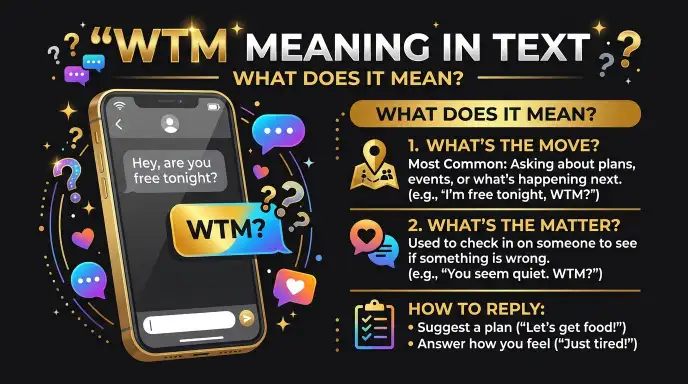
WTV means “whatever” in text messages and online conversations. People use it to show that they do not mind, do not have a strong preference, or do not want to continue discussing something. Its meaning depends on the conversation and the tone.
You may see WTV in text messages, TikTok comments, Snapchat chats, Instagram DMs, and WhatsApp conversations. Friends often use it when making plans, answering questions, or reacting to something casually.
For example, if someone asks, “What do you want to watch tonight?” you might reply, “WTV is fine with me.” This means you are happy to watch almost anything.
However, WTV can sometimes sound annoyed, dismissive, or uninterested. To understand its real meaning, you need to look at the situation and the messages around it.
WTV Meaning in Text
WTV is a common internet abbreviation for “whatever.” It is a shorter way to express a feeling or response without typing the complete word.
People often use it when they have no particular choice, do not care which option is selected, or want to end a discussion.
What Does WTV Stand For?
WTV stands for “whatever.” In everyday conversations, the word can express different feelings depending on how someone uses it.
Here are some common meanings:
- No preference: You are happy with any available option.
- Indifference: You do not have a strong opinion about something.
- Acceptance: You agree to go along with another person’s choice.
- Frustration: You are tired of discussing a subject.
- Dismissal: You do not want to give something more attention.
For example:
Friend: “Should we order pizza or burgers?”
You: “WTV, both sound good.”
In this conversation, WTV means that you have no strong preference.
Now consider another example:
Friend: “You never listen to me.”
You: “WTV.”
Here, the response might sound dismissive or annoyed. The surrounding conversation changes how the abbreviation feels.
Is WTV Slang, an Acronym, or an Abbreviation?
WTV is an informal internet abbreviation rather than a traditional acronym. It shortens the word “whatever” to make typing quicker.
People use it in casual digital conversations, especially when they want to send a short reply.
Although WTV is widely understood in many online settings, it is not suitable for every situation.
In formal emails, school assignments, professional messages, and official documents, writing “whatever” or using a more specific response is usually better.
WTV Meaning in Everyday Chat
In everyday conversations, WTV usually communicates that the speaker has no strong preference or does not want to spend much time discussing a subject.
For example:
Person A: “What time should we meet?”
Person B: “WTV works for you.”
The intended meaning is that Person B is flexible about the time.
However, WTV does not always communicate agreement. Sometimes, it means the person is tired of talking about something.
If a friend sends WTV after a disagreement, they might be upset or unwilling to continue the conversation. Rather than assuming the worst, consider their usual texting style and the messages that came before it.
Where Do People Use WTV?
WTV appears across different messaging apps and social media platforms. Its meaning generally stays the same, but the situation can affect its tone.
WTV Meaning on TikTok
On TikTok, WTV may appear in comments, direct messages, captions, or conversations between friends.
People might use it to react casually to a video, respond to a question, or show that they do not have a strong opinion.
For example:
Comment: “Which outfit looks better?”
Reply: “WTV, both are cute.”
Here, the person means that either outfit is fine.
In another conversation, someone might comment “WTV” when they are unimpressed by a trend or do not want to argue about an opinion.
Remember that a short comment alone does not always reveal someone’s feelings. The surrounding discussion can help you understand the intended meaning.
WTV Meaning on Snapchat
Snapchat conversations are often casual and brief, making abbreviations useful for quick replies.
Someone might send WTV when discussing weekend plans, choosing a place to eat, or responding to a friend’s suggestion.
For example:
Friend: “Do you want to go out or stay home?”
You: “WTV, I’m good with either.”
This response shows flexibility.
However, if a person sends only “wtv” during an argument, it might suggest frustration or a desire to stop discussing the issue.
The best way to interpret it is to consider the conversation rather than the abbreviation alone.
WTV Meaning on Instagram
On Instagram, people may use WTV in direct messages, comments, and casual conversations.
It can help keep a conversation short when someone is discussing plans or responding to a simple question.
For example:
Friend: “Should I post the first picture or the second one?”
You: “WTV, they both look nice.”
The message means that either picture is a good choice.
WTV can also appear in conversations about opinions, social situations, or minor disagreements. In those cases, its tone may be more important than its literal meaning.
WTV Meaning on WhatsApp
WhatsApp users often send short messages when chatting with friends, relatives, classmates, or people they know well.
WTV can be useful when making plans or expressing a lack of preference.
For example:
Friend: “What should we bring to the party?”
You: “WTV you think is best.”
This suggests that you are comfortable letting the other person decide.
Still, consider your relationship with the person. A casual abbreviation that works between close friends might sound careless in a serious conversation with a family member or colleague.
WTV Meaning in SMS Text Messages
WTV can also appear in ordinary SMS messages.
People may use it when they want to save time or give a short response without typing the entire word.
For example:
Person A: “Do you want tea or coffee?”
Person B: “WTV is fine.”
The message communicates that either drink is acceptable.
Because SMS messages do not always include facial expressions or voice cues, short replies can sometimes be misunderstood. If you want to avoid confusion, write a slightly clearer response, such as “Either one is fine with me.”
10 Real Chat Examples of WTV
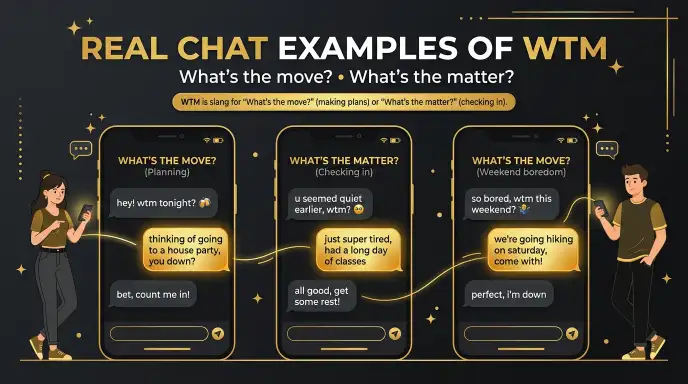
The following examples show how people might naturally use WTV in different texting situations.
Example 1: Choosing Food
A: What do you want for dinner?
B: WTV, I’m hungry.
Meaning: B does not have a particular preference and is happy to eat something available.
Example 2: Making Weekend Plans
A: Should we go shopping on Saturday or Sunday?
B: WTV works for me.
Meaning: B is flexible and can go on either day.
Example 3: Choosing a Movie
A: Comedy or horror tonight?
B: WTV, you pick.
Meaning: B is leaving the decision to the other person.
Example 4: Discussing Clothes
A: Do you like the blue shirt or the black one?
B: WTV, both look good.
Meaning: B thinks either shirt is a good option.
Example 5: Talking About Music
A: What song should I play next?
B: WTV you want.
Meaning: B does not have a specific song in mind.
Example 6: Responding to a Suggestion
A: We could meet at the cafe near your house.
B: WTV, sounds good.
Meaning: B is accepting the suggestion casually.
Example 7: A Minor Disagreement
A: You always think your idea is better.
B: Wtv.
Meaning: B may be frustrated or may not want to continue arguing. The exact intention depends on the context.
Example 8: Choosing a Game
A: Do you want to play football or basketball?
B: WTV, let’s just play something.
Meaning: B is not concerned about which game they play.
Example 9: Talking About Social Media
A: Which caption should I use for my picture?
B: WTV, choose the one you like.
Meaning: B is leaving the choice to the other person.
Example 10: Ending a Discussion
A: I’m telling you that you should have called earlier.
B: WTV, let’s move on.
Meaning: B wants to stop discussing the issue. Depending on the relationship and tone, this may sound impatient or dismissive.
These examples demonstrate an important point: WTV can communicate flexibility, indifference, or frustration. You need to understand the surrounding conversation to interpret it correctly.
How to Reply When Someone Says WTV
Your response should depend on the situation. If the person is being flexible, you can make the decision yourself. If they seem upset, a calm response may help.
Funny Replies
If you are chatting with a close friend, a playful answer can keep the conversation light.
- “Wow, so many opinions!”
- “Okay, I’ll choose our destiny.”
- “Fine, you’re getting my favorite.”
- “The responsibility is officially yours no more!”
- “WTV? That’s your final answer?”
Use these replies when you know the person is joking around. Avoid humor if the conversation is already tense.
Casual Replies
These responses work well in everyday conversations.
- “Okay, I’ll decide.”
- “Cool, let’s do that.”
- “Sounds good to me.”
- “All right, no problem.”
- “I’ll pick something, then.”
For example:
Friend: “WTV, you choose.”
You: “Okay, let’s get pizza.”
Friendly Replies
If you want to keep the conversation warm, you can respond in a way that includes the other person.
- “Are you sure? I want you to enjoy it too.”
- “Okay, but tell me if you have a preference.”
- “Let’s choose something we both like.”
- “Cool, I’ll find something fun.”
- “Either way, we’ll have a good time.”
These responses show that you value the other person’s opinion, even when they say they do not mind.
Neutral Replies
Sometimes, a simple answer is best.
- “Okay.”
- “Understood.”
- “That’s fine.”
- “All right.”
- “No problem.”
If the person sends WTV during an argument, you could ask, “Do you want to talk about it later?” This gives them room to respond without increasing the tension.
What If WTV Sounds Rude?
If someone sends WTV and you feel they are annoyed, avoid immediately assuming that they are angry with you.
You could reply:
“Are you okay? Your message sounds a little short.”
This gently checks their feelings without accusing them of being rude.
Another option is to give them some space and return to the conversation later.
Is WTV Rude or Offensive?
WTV is not inherently rude or offensive. It is a casual abbreviation of “whatever,” but the word itself can sound dismissive in some situations.
The meaning depends on the topic, the relationship between the speakers, and the way the message is delivered.
When WTV Is Not Rude
WTV is usually harmless when both people are relaxed and discussing something unimportant.
For example:
Friend: “Should we watch a comedy or an action movie?”
You: “WTV, I’m fine with either.”
This response communicates flexibility rather than disrespect.
When WTV Can Sound Rude
WTV may sound rude when someone uses it to dismiss another person’s feelings, end a serious discussion, or show that they are unwilling to listen.
For example:
Person A: “I felt hurt when you ignored my message.”
Person B: “WTV.”
In this situation, the reply may seem insensitive because it does not acknowledge the other person’s feelings.
A more thoughtful response would be, “I’m sorry you felt ignored. Can we talk about it?”
Is WTV Safe to Use?
Yes, WTV is generally safe in ordinary, informal conversations. It is not a swear word or an inherently offensive expression.
However, using it carelessly can create misunderstandings. If someone is sharing a personal problem, asking for help, or discussing an important issue, a complete and thoughtful response is usually better.
Is WTV Appropriate at School or Work?
WTV is best reserved for casual communication.
In school assignments, formal emails, job applications, and professional documents, use complete words and clear sentences.
For example, instead of writing:
“WTV, I’ll do it.”
You could write:
“Either option works for me. I’ll follow your preference.”
This sounds more respectful and professional.
Even in workplace chats, the complete word “whatever” can sometimes sound dismissive. A specific answer is often clearer.
Who Uses WTV?
WTV is used by people who communicate through texting and social media. It is especially convenient for casual conversations where short replies are common.
Do Teenagers and Young Adults Use WTV?
Teenagers and young adults may encounter WTV in messages, online discussions, and social media comments.
However, the abbreviation is not limited to one age group. Adults can use it too, especially when chatting informally with friends or family.
It would be inaccurate to say that only Gen Z uses WTV. Online abbreviations often spread across different age groups as people communicate through the same apps and digital communities.
WTV and Gen Z Communication
Gen Z commonly uses short forms and internet slang in casual digital communication. WTV fits this general pattern because it turns a familiar word into a quick message.
Still, not every young person uses the abbreviation, and its popularity can vary between communities and individuals.
Some people prefer WTV, while others simply type “whatever,” “either is fine,” or “you choose.”
Where Is WTV Most Common?
You may encounter WTV in:
- Text messages
- Snapchat conversations
- TikTok comments and messages
- Instagram direct messages
- WhatsApp chats
- Gaming conversations
- Online discussions with friends
There is no single platform where everyone uses it. Its appearance depends on personal texting habits and the type of conversation.
How Often Is WTV Used Online?
WTV is a recognizable informal abbreviation, but its frequency varies by platform and audience.
Without reliable, current usage data, it is not possible to give an accurate number for how often people use it or claim that it is more popular than every similar expression.
The practical point is simple: understanding WTV can help you interpret casual messages, even if you do not use it yourself.
Origin of WTV
WTV developed as a shortened written form of “whatever.” Like many internet abbreviations, it fits the need for quick communication in text messages and online chats.
Where Did WTV Come From?
The exact first use of WTV is difficult to establish with certainty. It is best understood as part of the broader habit of shortening familiar words in digital communication.
People often remove letters from common words when the intended meaning remains easy to recognize. WTV follows this pattern by using the opening letters of “whatever.”
The abbreviation is simple to type and can be understood by readers who are familiar with texting shorthand.
How Internet Culture Influenced WTV
Text messaging, online chat rooms, social media, and mobile messaging helped make shortened expressions a normal part of digital communication.
As people became accustomed to brief messages, abbreviations such as WTV offered a convenient way to communicate familiar ideas.
The expression also works well in quick replies, where people may want to respond without writing a complete sentence.
Does WTV Have One Official Origin?
There is no widely established, definitive origin date for WTV that can be confidently provided here.
Its meaning is clear, but the precise moment when people first began using it is uncertain. It is better to explain its function and modern usage than to invent a specific origin story.
WTV vs. IDK, IDC, IMO, and BRB
WTV is similar to other texting abbreviations because it makes digital conversations shorter. However, these expressions have different meanings and should not be treated as interchangeable.
| Abbreviation | Meaning | Type | Common Usage | Popularity |
| WTV | Whatever | Informal abbreviation | Showing no preference or dismissing a topic | Recognizable in casual chats |
| IDK | I don’t know | Initialism | Expressing uncertainty or a lack of knowledge | Widely recognized |
| IDC | I don’t care | Initialism | Expressing indifference | Widely recognized |
| IMO | In my opinion | Initialism | Introducing a personal view | Widely recognized |
| BRB | Be right back | Initialism | Saying you will return shortly | Widely recognized |
The popularity descriptions are general, not based on a current numerical ranking.
WTV vs. IDK
WTV means “whatever,” while IDK means “I don’t know.”
Use WTV when you do not have a strong preference or want to dismiss a topic. Use IDK when you do not know the answer.
Example:
A: “Which movie should we watch?”
B: “WTV, you choose.”
Here, B is letting A decide.
But if B says, “IDK, what movies are available?” they are saying they do not know which options are available.
WTV vs. IDC
WTV means “whatever,” while IDC means “I don’t care.”
The expressions can overlap when someone wants to show indifference, but they are not always identical in tone.
For example, “WTV, you choose” can sound flexible or dismissive depending on the context.
“IDC” may sound more direct because it explicitly says that the person does not care.
If you want to avoid sounding rude, consider writing, “Either option works for me.”
WTV vs. IMO
WTV means “whatever,” while IMO stands for “in my opinion.”
These expressions serve different purposes.
Use WTV to communicate a lack of preference or interest. Use IMO when sharing your personal view.
For example:
“WTV, let’s go with your choice.”
This leaves the decision to the other person.
“IMO, the blue shirt looks better.”
This expresses a personal opinion.
WTV vs. BRB
WTV means “whatever,” while BRB stands for “be right back.”
BRB is used when someone needs to step away from a conversation temporarily.
For example:
“BRB, someone is at the door.”
This tells the other person that the speaker expects to return shortly.
WTV does not communicate that someone is leaving temporarily. It relates to their response or attitude toward a topic.
Real World Usage Example
Imagine two friends are planning to meet after school.
One friend asks, “Do you want to go to the shopping mall or grab something to eat?”
The other replies, “WTV, I’m good with either.”
In this situation, WTV communicates that the person has no strong preference. The first friend can choose the activity without worrying about disappointing them.
Now imagine the same friends are discussing a disagreement.
One says, “I was upset because you didn’t tell me about the plan.”
The other responds, “WTV.”
This time, the reply could sound dismissive. The person may be frustrated, uncomfortable, or unwilling to discuss the problem.
These two situations show why context matters. The abbreviation remains the same, but its emotional meaning changes with the conversation.
If you are unsure what someone means, consider asking a simple follow up question. For example, “Do you really not mind, or are you upset about something?”
This approach can help prevent a minor misunderstanding from becoming a bigger problem.
When Should You Avoid Using WTV?
Although WTV is useful in casual texting, there are situations where a more thoughtful response is better.
During Serious Conversations
If someone is discussing a problem, expressing hurt, or asking for emotional support, replying with WTV may seem as though you do not care.
Instead, acknowledge what they said and explain how you feel.
For example, write, “I understand what you’re saying. Can we talk about it?”
In Professional Communication
Avoid using WTV in formal emails, job applications, official messages, or important workplace discussions.
A clear response such as “Either option works for me” communicates flexibility without sounding dismissive.
When You Need to Make a Clear Decision
Sometimes, saying WTV leaves the other person with all the responsibility.
If a friend is struggling to make plans, it may be more helpful to offer a suggestion.
Instead of saying, “WTV,” try “Let’s get pizza” or “Saturday works better for me.”
When Your Message Could Be Misunderstood
Short messages can be difficult to interpret because readers cannot hear your voice or see your facial expression.
If you want to show that you genuinely do not mind, add a few words to clarify your meaning.
For example:
- “WTV, I’m happy with either.”
- “Whatever you prefer is fine.”
- “I don’t have a strong preference.”
- “You can choose; I’m good with both.”
These alternatives make your intention easier to understand.
Frequently Asked Questions
1. What does WTV mean in text messages?
WTV means “whatever.” People use it to show that they have no strong preference, accept another person’s choice, or do not want to continue discussing something.
2. What does WTV mean on TikTok?
On TikTok, WTV usually means “whatever.” It may appear in comments, captions, or messages when someone expresses indifference, responds casually, or dismisses a topic.
3. Is WTV slang?
WTV is an informal internet abbreviation for “whatever.” It is commonly associated with texting and casual online communication.
4. Is WTV rude or offensive?
WTV is not inherently offensive. However, it can sound rude or dismissive when used during an argument or in response to someone’s serious feelings.
5. How should you reply to WTV?
Your reply depends on the context. You could say “Okay, I’ll choose,” “Sounds good,” or “Are you sure you’re okay with that?” if you are unsure if the person is upset.
6. What does WTV mean from a girl?
WTV means “whatever” regardless of who sends it. A girl might use it to show that she has no preference, is responding casually, or does not want to discuss something further. The context matters more than the sender’s gender.
7. What does WTV mean from a guy?
A guy using WTV is also saying “whatever.” He may be relaxed about a decision, indifferent to a topic, or frustrated. You cannot reliably determine his feelings from the abbreviation alone.
8. Is WTV the same as IDC?
No. WTV means “whatever,” while IDC means “I don’t care.” They can express similar feelings in some conversations, but IDC is more direct about indifference.
9. Should I use WTV at work?
It is better to avoid WTV in formal or important professional conversations. Expressions such as “Either option works for me” or “I’m happy with your recommendation” sound clearer and more professional.
10. What is another way to say WTV?
Depending on the situation, you can say “whatever,” “either is fine,” “you choose,” “I don’t mind,” or “it’s up to you.” Choose the expression that best communicates your actual feelings.
Conclusion
WTV means “whatever” in texting and online conversations. People use it when they have no strong preference, want someone else to make a decision, or do not want to continue discussing a topic.
You may see it on Snapchat, TikTok, Instagram, WhatsApp, and in ordinary SMS messages. It is an informal abbreviation that can make casual communication quicker.
However, WTV can sometimes sound dismissive or annoyed, especially during serious conversations or disagreements. Its meaning depends on the context, so avoid assuming that someone is angry simply because they use it.
If you want to use WTV clearly, consider adding a few words, such as “WTV, I’m fine with either option.” In formal situations, choose a complete and respectful sentence instead.
Understanding the difference between casual indifference and frustration will help you interpret WTV more accurately and respond naturally in everyday conversation
Learn the Meaning!

Hi, I’m Chloe Parker. I write simple and practical articles about slang, grammar, spelling, vocabulary, and commonly confused words. My goal is to make English easier to understand through clear explanations and real-life examples. Whether you’re a student, writer, or English learner, I’m here to help you build confidence and improve your everyday English.